
Introduction: Why Understanding the Market Feels So Hard
For many people stepping into trading, the experience often feels overwhelming. Charts move quickly, indicators flash signals, and opinions from so-called experts flood every corner of the internet. At first, it seems like success depends on finding the perfect strategy or the most accurate indicator. But over time, many traders realize something frustrating—those tools often contradict each other, leaving them confused rather than confident.
The deeper truth is that markets are not as complicated as they appear. Beneath all the noise, there are only two forces at work: price and volume. These two elements have guided markets for more than a century, long before computers, trading apps, or automated systems existed. When understood correctly, they offer a clear and logical way to interpret market behavior.
Volume Price Analysis, commonly known as VPA, brings these two elements together. It teaches you how to read what is happening behind the scenes, helping you understand not just where the market is moving, but why it is moving. Once this begins to make sense, trading becomes less about guessing and more about observing and interpreting.
There’s Nothing New in Trading—And That’s the Advantage
One of the most surprising realizations for new traders is that modern trading is not as new as it seems. The same principles that worked decades ago still apply today. Legendary traders like Charles Dow, Jesse Livermore, and Richard Wyckoff built their success using methods that revolved around price and volume. They didn’t rely on complex indicators or artificial intelligence. Instead, they focused on understanding how markets behave.
This consistency across time is actually a huge advantage. It means that once you learn how to read the relationship between price and volume, you are tapping into something timeless. Markets still move because of human emotions—fear, greed, hope, and uncertainty. These emotions create patterns, and those patterns repeat over and over again.
Volume Price Analysis is not a new invention. It is a refined way of understanding something that has always been there. And that is precisely what makes it powerful.
Why Volume Price Analysis (VPA) Matters More Than Most Traders Think
Volume is often overlooked by beginners, yet it is one of the most revealing elements on a chart. While price shows movement, volume shows participation. It tells you how many traders are involved in a move and how strong that move might be.
Imagine watching a crowd. If only a few people are moving in one direction, it might not mean much. But if a large crowd suddenly rushes forward, you know something important is happening. Volume works in a similar way. It reveals the level of interest and commitment behind price movements.
When price rises with strong volume, it usually means the move is supported by genuine buying. When price rises with weak volume, it may signal that the move lacks strength and could reverse. This ability to distinguish between real and false moves is what makes volume so valuable.
In many ways, volume acts as a truth detector. It helps you see beyond the surface and understand the real story behind the chart.
The Role of Price: What You See Isn’t Always the Full Story
Price is the most visible part of the market. It forms the charts that traders analyze every day. But while price shows direction, it does not always reveal intention.
A rising market may look strong, but without volume, you cannot tell whether that strength is genuine or temporary. Sometimes, prices move in ways that attract traders into the market at the wrong time. These moves can be misleading, especially when they are driven by short-term speculation rather than long-term commitment.
This is where Volume Price Analysis becomes essential. By combining price with volume, you gain a clearer perspective. You begin to understand whether a move is likely to continue or reverse, and that insight can make a significant difference in your trading decisions.
The Core Idea of VPA: Agreement and Disagreement
At the heart of Volume Price Analysis lies a simple but powerful idea. You are always comparing two things: price and volume. The key question is whether they agree with each other.
When price and volume move together, the market is behaving normally. For example, if prices are rising and volume is also increasing, it suggests strong buying interest. This is often a sign that the trend may continue.
However, when price and volume do not align, it creates an anomaly. For instance, if prices are rising but volume is falling, it may indicate that the move is weak. This kind of disagreement often serves as an early warning that something is about to change.
Learning to spot these moments is one of the most valuable skills in trading. It allows you to anticipate shifts in the market rather than reacting to them after they happen.
Understanding Market Cycles: Accumulation and Distribution
Markets do not move randomly. They follow cycles, and understanding these cycles is crucial for successful trading.
One of the most important phases is accumulation. This is when experienced traders and institutions begin to buy assets quietly. During this phase, prices often move sideways, and there is little excitement in the market. To the average trader, nothing seems to be happening. But beneath the surface, smart money is building positions.
The opposite phase is distribution. This occurs when those same experienced traders begin to sell their positions. Prices may still be rising, and public interest is often high. Many traders enter the market at this stage, believing the trend will continue. Unfortunately, this is often when the trend is about to end.
By understanding accumulation and distribution, you can position yourself alongside the smart money rather than following the crowd.
The Three Laws That Govern Market Behavior of Volume Price Analysis (VPA)
Volume Price Analysis is deeply connected to three fundamental principles that explain how markets function.
The first is the law of supply and demand. When demand is greater than supply, prices rise. When supply exceeds demand, prices fall. This is the foundation of all market movement.
The second is the law of cause and effect. Every movement in the market has a cause, and the size of that cause determines the size of the effect. Large trading activity often leads to significant price moves, while smaller activity results in minor changes.
The third is the law of effort versus result. This principle compares the amount of activity (volume) with the outcome (price movement). If there is a mismatch between the two, it suggests that something unusual is happening.
Together, these laws provide a framework for understanding how and why markets move.
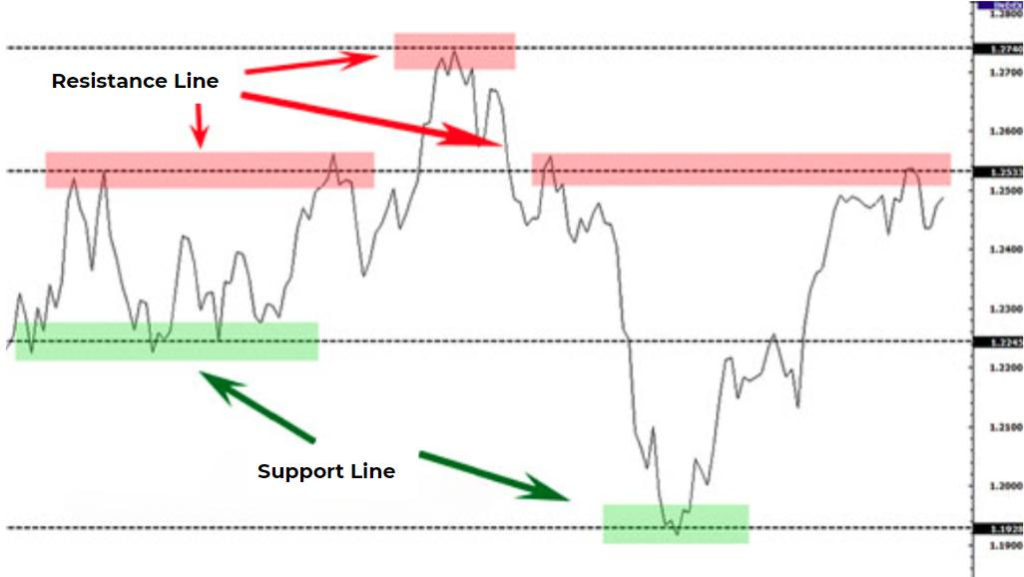
Support and Resistance: Adding Depth with Volume in Volume Price Analysis (VPA)
Support and resistance levels are widely used in trading, but they become much more meaningful when combined with volume.
When price approaches a key level, volume can help you determine whether that level will hold or break. A breakout accompanied by strong volume is more likely to be genuine. On the other hand, a breakout with weak volume may fail, trapping traders who entered too early.
This additional layer of insight helps you make more informed decisions and avoid common pitfalls.
Trends and Timing: Getting Ahead of the Market
Many traders struggle with timing. They enter trades too late, often when the trend is already nearing its end. Traditional methods of identifying trends can lag behind actual market movements.
Volume Price Analysis offers a different approach. By observing changes in volume, you can identify the early stages of a trend. This allows you to enter trades before the majority of traders recognize the opportunity.
Being early rather than late can significantly improve your results.
Volume at Price: Seeing Where the Market Cares Most
Another powerful concept is volume at price. Instead of looking at volume over time, this approach focuses on how much trading occurs at specific price levels.
These levels often act as areas of support and resistance. When price moves away from a high-volume area, it can signal the beginning of a strong trend. Understanding these zones gives you a clearer picture of where the market is likely to react.
The Human Side of Trading: Emotion vs. Logic
One of the biggest challenges in trading is managing emotions. Fear, greed, and uncertainty can lead to poor decisions. Many traders buy when prices are high and sell when prices are low, simply because of emotional reactions.
Volume Price Analysis helps reduce this emotional influence. By focusing on logic and observation, you begin to make decisions based on evidence rather than feelings. Over time, this shift can transform your approach to trading.
Putting Everything Together: A Practical Approach
Applying Volume Price Analysis does not require complex tools. It starts with observing price movements and comparing them with volume. From there, you look for patterns, confirmations, and anomalies.
As you gain experience, you begin to recognize recurring behaviors. You learn to identify strong trends, weak movements, and potential reversals. This process takes time, but it becomes easier with practice.
Common Mistakes to Avoid
While VPA is powerful, it is not immune to misuse. One common mistake is ignoring context. Volume must always be interpreted relative to what has happened before.
Another mistake is acting too quickly. It is important to wait for confirmation before entering a trade. Patience is essential.
Overtrading is also a problem. Not every movement is an opportunity. Sometimes the best decision is to wait.
Conclusion: A Simpler, Smarter Way to Trade
Volume Price Analysis offers a refreshing approach in a world filled with complexity. It focuses on the essentials and provides a logical framework for understanding the market.
By learning to read the relationship between price and volume, you gain a deeper insight into market behavior. You begin to see patterns that others miss and make decisions with greater confidence.
Trading will always involve risk, and there are no guarantees of success. But with the right knowledge and approach, you can improve your chances and develop a more consistent strategy.
In the end, VPA is not just a technique—it is a way of thinking. And once you adopt that mindset, the market becomes far less mysterious and far more understandable.
Read Related Content:
How Long Does It Take to Learn Forex Trading?
Read Related Content From Outbound:
To understand more about Volume Price Analysis (VPA) download the below pdf and read: